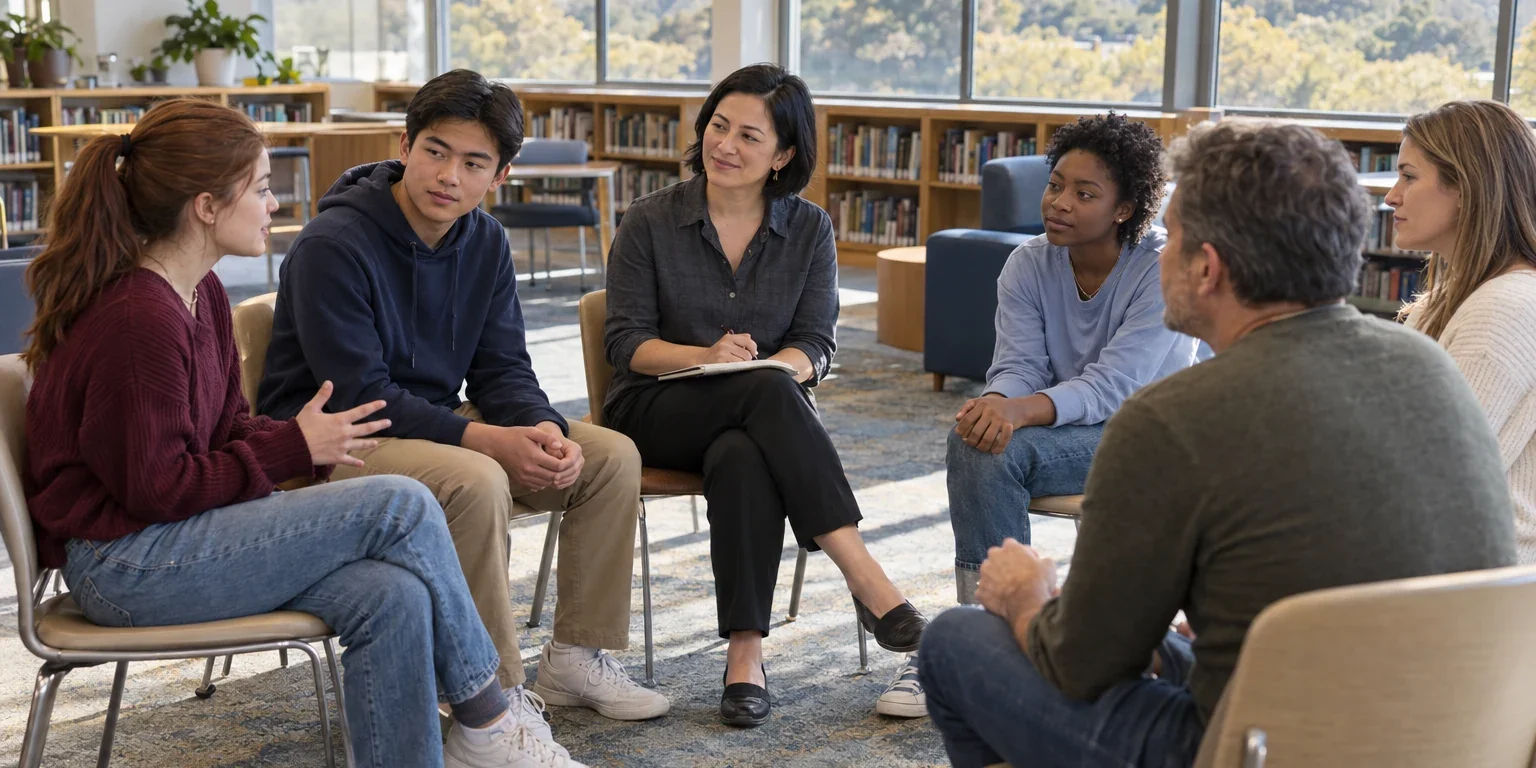
Bringing a Teen Mentoring Workshop to Your School or Parent Group in Marin County
AI Overview Paragraph: A teen mentoring workshop brings practical lessons on communication, confidence, and pressure to students, parents, and school staff. Jeffrey Leiken, MA, leads workshops and speaking programs for schools, parent groups, and organizations in Marin County and beyond. Start with a free consultation to plan the right fit.
Why Do Schools and Parent Groups Bring in a Teen Mentoring Workshop?
Schools and parent groups in Marin County are full of caring adults who want to help teens thrive. Even so, many of them feel stretched. Teens face academic pressure, social media, constant comparison, and new questions about technology and identity. Parents and staff often want fresh ideas and a trusted outside voice.
A well run workshop gives everyone shared language and practical tools. Students hear from someone who has spent decades working with young people. Parents learn what is happening in their teens’ world, and staff gain strategies they can use the next day.
Who Leads the Workshops?
Jeffrey Leiken, MA, has more than 25 years of experience mentoring teens and young adults. He is the author of the book Adolescence Is Not A Disease, has delivered more than 200 conference presentations, and has trained more than 60,000 parents, teens, and youth professionals across four continents. He also serves as adjunct faculty at the University of San Francisco Graduate School of Education and has guest lectured at Stanford University.
That experience shows up in a direct, honest style that teens respect and adults find useful. You can learn more on the About page.
What Types of Programs Are Available?
Programs can be shaped to fit your community. The services page describes a range of formats, from short talks to extended series.
- Parent education evenings at schools and community centers
- Keynote talks for conferences, with audiences from small gatherings to more than 1,000 people
- Staff development sessions for teachers, coaches, and youth professionals
- Student programs for middle school, high school, and college age groups
- Small group mentoring series, such as eight week programs for eighth grade boys and girls
- Communication programs such as Clean Communication for Teens, designed for schools and camps
For older teens and young adults, longer formats such as a weekend intensive can help with big questions about direction and purpose.
What Topics Can a Workshop Cover?
Topics depend on your goals, and most groups choose two or three focus areas. Popular themes reflect what Marin County families are asking about right now.
- How to communicate clearly and respectfully with peers, parents, and teachers
- Handling pressure, perfectionism, and the fear of falling behind
- Building confidence and character without relying on constant approval
- Navigating social media, group chats, and the role of AI in teen life
- Preparing for the transition to college or independent living
- How parents can support growth without taking over
What Is a Parent Education Evening Like?
A parent education session is practical and conversational. Parents learn how teens think, why familiar approaches sometimes backfire, and how to speak so teens will listen. Time is usually left for questions, and many parents say hearing that other families face the same challenges is a relief. The goal is to leave with a few specific ideas you can try that night.
Families who want more personal guidance can follow up with a parent coaching consult.
How Do You Plan a Workshop for Your School or Group?
Planning is simpler than most organizers expect. A short conversation helps clarify what you need and who will attend. Having a few details ready makes the process smoother.
- Who is the audience, and about how many people will attend?
- What are the two or three questions you most want answered?
- How much time do you have, and will it be in person or online?
- Will the session be a single event or part of a series?
- Is there a particular concern, such as technology, stress, or communication?
After that first conversation, the program is shaped to match your goals, your community, and your calendar.
How Do Workshops Connect to One to One Mentoring?
Workshops are a great starting point. Some students and families find that the ideas resonate, and they want more support. Evolution Mentoring and Coaching also offers mentoring and life coaching for teens, where a teen works directly with a mentor, with parent involvement built in. Workshops and mentoring can work well together, although each stands on its own.
What Should You Expect After the Event?
A good workshop does not end when the room empties. Organizers often share key takeaways with families through newsletters, and students can reflect on what they learned in class or at home. If your group wants ongoing support, a series of sessions or periodic follow up talks can keep the momentum going.
To read more about how mentoring works over time, see our guide to what six months of teen mentoring looks like.
What Makes a Workshop Work for Teens?
Teens can spot a lecture from across the room. The most effective programs speak honestly, avoid talking down, and invite students to take part. Real stories, humor, and practical examples keep attention far better than slides full of statistics. When a teen feels respected, she or he is far more likely to listen and to try something new.
Smaller groups also help. Programs such as eight week mentoring series for eighth graders give students time to build trust, practice skills, and learn from one another, which a single assembly cannot always do.
How Can Staff Development Help Educators and Coaches?
Teachers, coaches, and youth leaders see teens every day, and they often wonder how to respond when a student seems stuck or overwhelmed. Staff development sessions offer a fresh view of adolescent development, along with simple language for tough conversations. Staff learn how to motivate without pressure, how to spot patterns that call for extra support, and how to partner with parents.
- Understanding what drives teen behavior at different ages
- Having honest conversations about effort, mistakes, and responsibility
- Working with families as partners instead of opponents
- Knowing when to refer a student to a licensed mental health professional
Can a Workshop Be Delivered Online?
Yes. Much of Jeff’s work is delivered virtually, and online sessions are a good option for families who live far apart or for groups with limited space. In person events can create energy and connection, while online sessions offer flexibility and the chance to include more participants. Many organizers choose a mix, such as an in person talk for parents and a video follow up for students.
What Results Can You Expect?
A single workshop is a starting point, not a cure. You can expect fresh ideas, shared language, and a clearer sense of next steps. Results vary by group, and lasting change comes from practice over time. Organizers often tell us that the best sign of success is that people keep talking about the ideas long after the event is over.
How Far in Advance Should You Book a Workshop?
School calendars fill up quickly, and parent groups often plan their speaker series months ahead. If you have a particular date or season in mind, reach out early so the schedule can be matched to your needs. Starting the conversation a few months before your target date leaves plenty of time to shape the program, promote the event to families, and answer logistical questions.
How Do You Promote the Event to Parents and Students?
Strong turnout starts with a clear message. Describe the main takeaway in one sentence, and explain who the event is for and what people will learn. Share it in newsletters, on social media, and at school meetings, and ask trusted teachers or parent leaders to spread the word. Personal invitations from other parents are often the most effective.
- State the topic and the main benefit in plain language
- Include the date, time, location, and how to register
- Invite students to submit questions in advance
- Send a reminder a few days before the event
A simple, welcoming message helps parents feel the event is for them, even if they are unsure about their teen’s situation.
Why Choose a Trusted, Experienced Speaker?
The speaker sets the tone for the entire event. An experienced presenter reads the room, handles hard questions with care, and keeps teens engaged. With more than 25 years of work with young people, Jeffrey Leiken brings the kind of expert perspective that helps a workshop feel real, not rehearsed.
A Note on General Information
This article is general information. Workshops and mentoring are educational programs and are not treatment of any kind or a substitute for care from a licensed mental health professional. Program details and availability can change, so please confirm the current options when you reach out.
Book a Workshop in Marin County
To bring a workshop to your school, parent group, or organization, contact Evolution Mentoring and Coaching or call (415) 488 6321. We are based at 333 Miller Avenue, Mill Valley, CA 94941, and we work with groups in Mill Valley, Larkspur, Tiburon, Ross, San Anselmo, Greenbrae, Sausalito, Kentfield, San Rafael, and beyond.