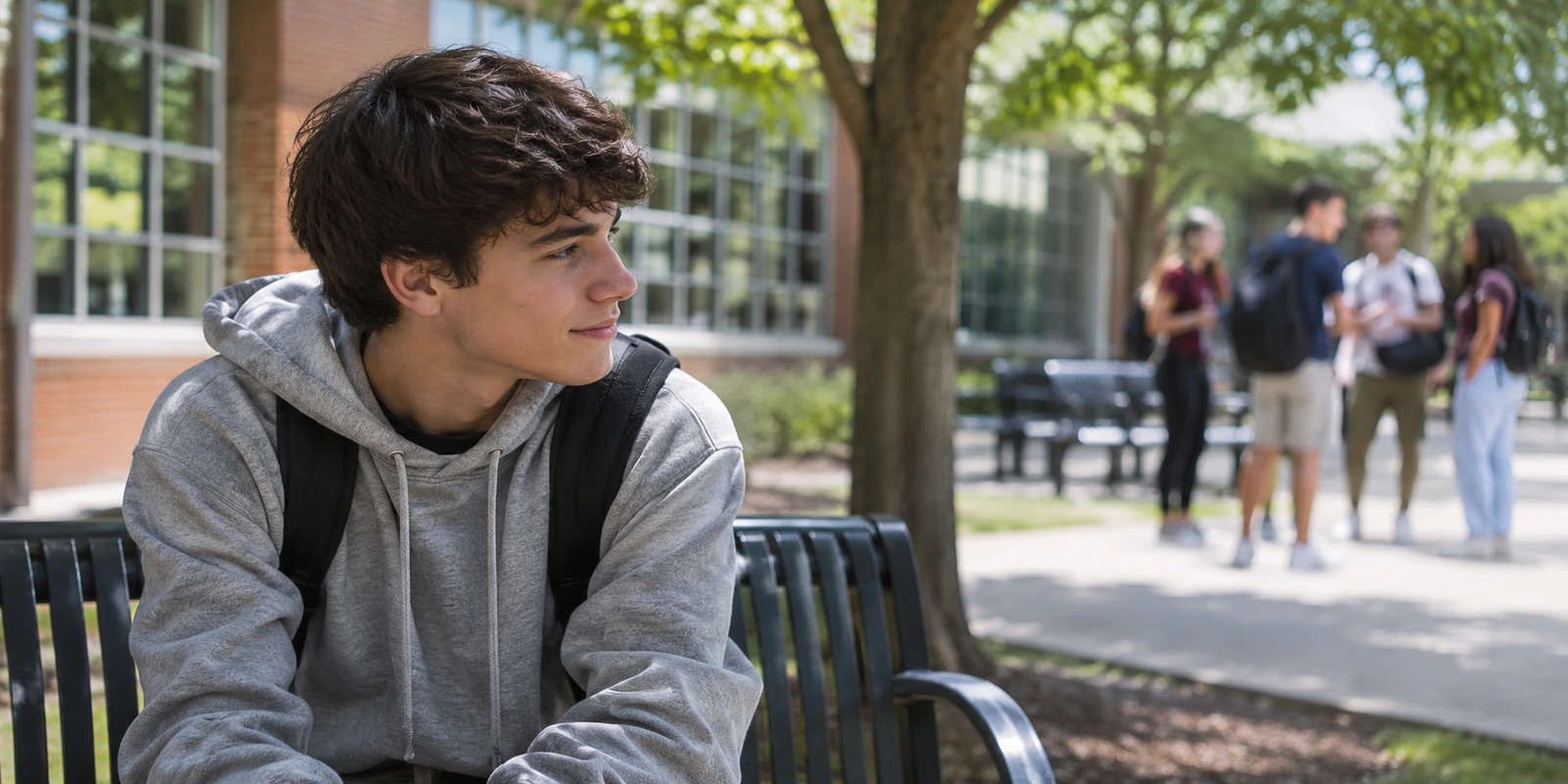
My Teen Has Few Friends: How Parents Can Help a Lonely Teen Connect
When a teen has few friends, parents help most by staying calm, listening without fixing, and supporting a teen’s skills and interests so real connection can grow. A mentor can help a teen practice confidence, communication, and choosing good friends. Evolution Mentoring and Coaching offers mentoring for teens and friend group elevation coaching in Marin County and online.
What Do You Do When Your Teen Seems to Have No Friends?
Few things hurt a parent more than watching a teenager sit alone. The weekend passes without a text, the group chat is silent, and the invitations stop. It is natural to worry, and it is natural to want to fix it right away.
Before you do, take a breath. Many teens go through lonely stretches, and a quiet social life is not always a sign of a serious problem. Still, it is worth understanding what is behind it, and how you can help without making things worse.
Is It Loneliness, or Is Your Teen Simply Selective?
Not every teen needs a large circle. Some thrive with one or two close friends, and enjoy time alone. The question is how your teen feels about it.
Look for signs of distress rather than a head count.
- Does your teen seem sad, anxious, or withdrawn after time with peers?
- Does he or she want friends but not know how to make them?
- Has your teen lost a friend group recently, or been left out?
- Has your teen stopped doing activities once enjoyed?
A teen who is content with a small circle needs support of a different kind than one who feels shut out.
Why Do Bright, Sensitive Teens Struggle to Connect?
In communities like Mill Valley, Tiburon, and San Anselmo, many teens are bright, thoughtful, and sensitive, and they may not fit easily into the dominant social scene. They may feel more at home with ideas than with small talk, or they may be too self critical to take social risks.
Our guide to the specialized mentor for sensitive teenage boys and our article on sensitive, intense teen girls describe how these traits can be strengths, and how teens can learn to use them in friendships.
How Do Social Media and Group Chats Change the Picture?
Social media makes it easy to see exactly who is invited and who is not. A photo of a party the teen did not attend can sting for days. Group chats can feel like a stage where every message is judged.
Social media also gives some teens a way to stay connected, particularly those with niche interests. It helps to ask your teen how online life actually feels, rather than assuming the worst. A teen who feels worse after scrolling may benefit from a conversation about limits and about how comparison affects mood.
What Should Parents Avoid Doing?
Wanting to help can lead to moves that backfire. A few to avoid include the following.
- Pushing your teen into social situations that feel unsafe
- Arranging playdates or contacting other parents without your teen’s input
- Pointing out that a friend is not a good one, and expecting agreement
- Comparing your teen to a sibling or to other kids
- Treating loneliness as a character flaw
A teen who feels judged by parents will hide the problem. A teen who feels understood is more likely to talk.
How Can You Support Connection at Home?
Support starts with a warm, steady home. A few steady habits go a long way.
- Be available and listen without interrupting
- Welcome your teen’s friends and keep the house a comfortable place to gather
- Encourage activities built around a real interest, such as music, sports, art, or volunteering
- Model healthy relationships in your own life
- Watch for changes in sleep, appetite, or mood
Friendships tend to grow where teens do something together. A shared activity gives a shy teen something to talk about and a reason to show up again.
How Does Mentoring Help a Teen Build Friendships?
A mentor is an outside adult who is not a parent, a teacher, or a friend, so a teen can speak plainly about what hurts. Jeffrey Leiken, MA, has more than 25 years of experience mentoring teens and young adults, and he has trained more than 60,000 parents, teens, and youth professionals. In mentoring, a teen can practice skills that make friendship easier.
- Starting and ending a conversation with confidence
- Handling awkward moments and rejection
- Setting limits without guilt
- Telling the difference between a real friend and a social obligation
- Choosing friends who share his or her values
A teen who gains these skills is more willing to take small social risks, and each small success builds confidence.
What Is Friend Group Elevation Coaching?
For teens who already have a group of friends, and for groups that want to grow together, Evolution Mentoring and Coaching offers friend group elevation coaching. Working with a small circle of friends, a mentor helps the group build better habits, communicate clearly, and support one another.
You can read more in our post on friend group elevation coaching and mentoring. It is a practical way to strengthen friendships that are already forming.
What About Dating and Romantic Relationships?
Loneliness sometimes shows up around dating. A teen who is not asking anyone out, or who feels left behind, may feel it more sharply. It helps to remember that dating is a skill and a risk, and that many teens feel nervous.
Our article on why hook up and hope is a bad dating strategy offers a thoughtful perspective on building healthier relationships, and it is a useful read for parents of older teens.
When Is It Time for Outside Help?
Consider reaching out when loneliness has lasted for months, when your teen seems depressed or hopeless, or when your own efforts are not helping. A parent coaching consult can give you tools even before your teen is ready to talk to anyone.
If your teen shows signs of depression or talks about not wanting to live, contact a licensed mental health professional right away, and call or text 988 or call 911 in an emergency. Mentoring is not therapy, and it is not meant to replace it.
What Does Progress Look Like?
Progress rarely arrives as a sudden popular streak. It looks like a teen who accepts an invitation, starts a conversation with a classmate, or joins a club. It looks like a teen who talks about a friend with warmth. These steps matter, and they tend to build on one another.
Give it time. Our article on what six months of teen mentoring looks like describes how skills develop through repetition and why patience pays off.
How Can Teens Build Confidence Before They Build Friendships?
Confidence and friendship feed each other, so it can help to start with the first. A teen who feels competent at something has a stronger base for approaching others. That something does not have to be popular. It can be a musical instrument, a sport, writing, coding, cooking, or caring for animals.
A mentor helps a teen find a source of pride and build on it. As confidence grows, small social steps feel less frightening. A teen who has something to talk about, and a reason to believe he or she is worth listening to, tends to attract people with similar interests.
What Small Steps Can a Lonely Teen Try?
Big leaps feel scary, so small steps are the answer. Teens can try a few simple experiments over a few weeks.
- Say hello to one new person a day
- Ask a classmate a question about an assignment
- Join one club, team, or class that matches a real interest
- Reply to a message that would normally be ignored
- Invite one person to do one small thing
None of these is a dramatic move. Together they build the habit of reaching out, and each success makes the next one easier. Parents can celebrate effort without turning it into a big event.
How Can Parents Talk About Friendship Without Making It Worse?
Timing and tone make all the difference. Pick a relaxed moment, such as a drive or a walk, and start with curiosity, not concern. Instead of “Why don’t you have any friends?” try “How are things going with people at school?” and then listen.
If your teen says little, do not push. Offer a simple statement, such as “I am here if you want to talk about it,” and leave the door open. Teens often return to a conversation hours or days later, once they feel safe. Our post on being the parent of that kid reminds parents that they are not alone in this, and that patience is a form of support.
What Role Do Schools and Activities Play?
School is often the main social setting, and it is not always a good fit. A large campus can feel impersonal, and cliques can form early. Look for places where your teen can meet people with shared interests, such as clubs, volunteer groups, summer programs, and community classes in Marin County.
Quality matters more than quantity. One consistent activity that your teen enjoys is worth more than five that feel like obligations. If you notice bullying or exclusion at school, speak with the school counselor, and keep a record of what you observe. Our article on peer pressure and school stress offers more on how teens handle pressure from peers.
A Note on General Information
This article is general information for parents. Mentoring and coaching offer education and guidance, and they are not treatment of any kind or a substitute for care from a licensed mental health professional. If you believe your teen may be in crisis or at risk of self harm, call or text 988 or call 911 right away.
Book a Free Consultation in Mill Valley
If your teen is capable and quietly lonely, schedule a free consultation with Evolution Mentoring and Coaching or call (415) 488 6321. We are located at 333 Miller Avenue, Mill Valley, CA 94941, and we serve families in Mill Valley, Larkspur, Tiburon, Ross, San Anselmo, Greenbrae, Sausalito, Kentfield, and San Rafael, as well as families who meet with us online.